
Elevate your operations with tethered drone technology
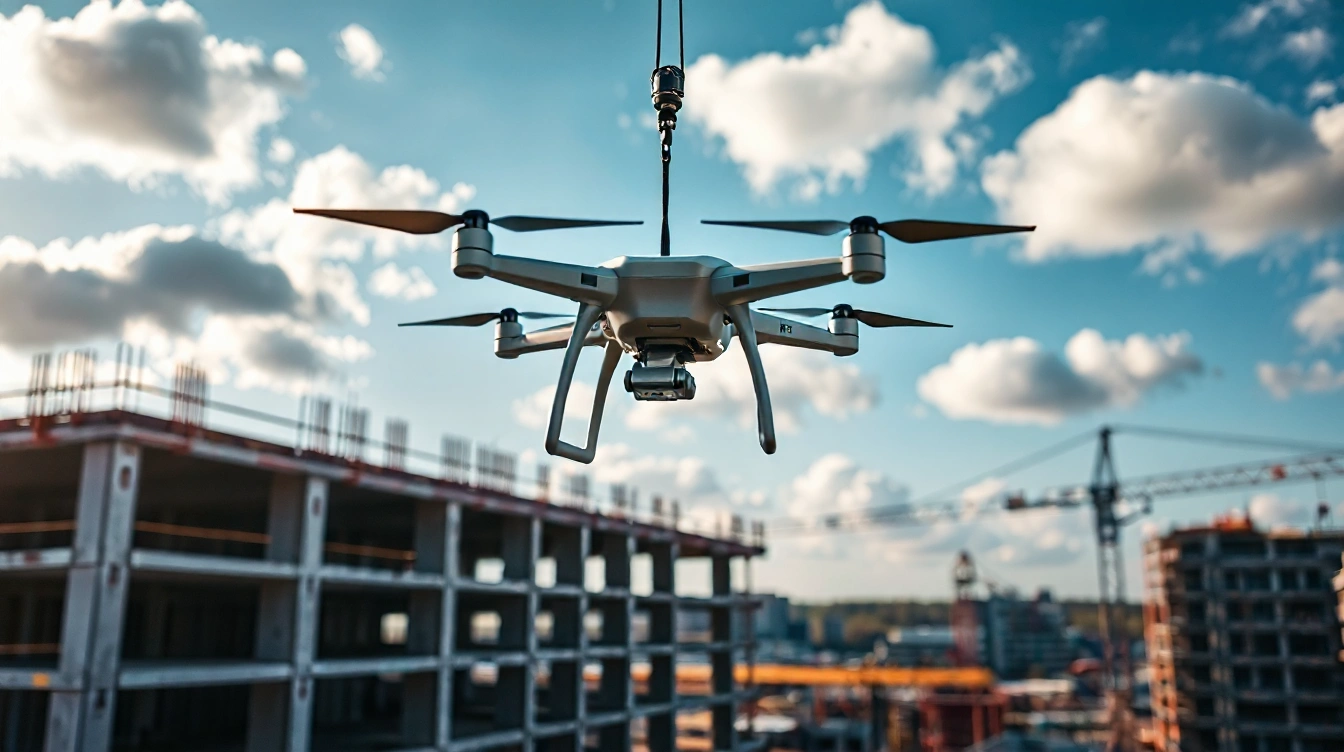
Advanced Tethered Drone Technology for Continuous Surveillance: Revolutionizing Mission-Critical Operations
Why settle for limited flight time when mission-critical operations demand continuous surveillance? Traditional battery-powered drones typically offer 20-40 minutes of flight time, creating dangerous operational gaps. The global professional drone services market is projected to reach $63.6 billion by 2025, with tethered drone technology driving significant growth according to MarketsandMarkets research. Companies like Elistair are revolutionizing aerial surveillance with systems that provide unlimited flight duration, transforming how security teams approach persistent monitoring and emergency response operations.
En parallèle : What are the best practices for setting up a remote desktop environment using a Dell PowerEdge T40 server?
Why These Systems Outperform Traditional Battery-Powered Platforms
The fundamental limitation of battery-powered drones becomes apparent within the first 30 minutes of operation. While traditional platforms require frequent landings for battery swaps, tethered systems deliver continuous power through ground-based stations, eliminating operational interruptions entirely.
This continuous operation capability transforms surveillance missions from fragmented sessions into seamless monitoring operations. Security teams can maintain persistent aerial coverage without the tactical vulnerabilities created by battery replacement windows. The 24-hour operational standard that tethered platforms provide has become an industry benchmark for mission-critical applications.
Sujet a lire : How can you configure an HP Z2 G5 Tower for optimal performance in running virtual machines?
Beyond operational continuity, the economic advantages compound over time. Battery-powered platforms generate ongoing costs through battery degradation, replacement cycles, and the personnel hours required for frequent maintenance. Tethered systems eliminate these recurring expenses while providing superior reliability for continuous monitoring scenarios.
The operational flexibility extends to deployment scenarios where traditional drones simply cannot perform effectively. Extended perimeter surveillance, disaster response coordination, and prolonged security operations all benefit from the unlimited flight time that only tethered platforms can deliver consistently.
Key Applications Driving Mission-Critical Success
Tethered drone technology transforms how organizations approach continuous surveillance across multiple critical sectors. These systems deliver unmatched operational reliability where traditional battery-powered drones simply cannot meet the demanding requirements of extended missions.
- Perimeter Surveillance: 24/7 monitoring of critical infrastructure, borders, and high-security facilities with zero downtime. Real-time threat detection capabilities enable immediate response protocols while maintaining constant visual coverage of vulnerable areas.
- First Responder Operations: Emergency services leverage unlimited flight time for disaster response, search and rescue missions, and incident command support. Teams maintain aerial oversight throughout extended operations without worrying about battery limitations or mission interruptions.
- ISR Missions: Intelligence, surveillance, and reconnaissance operations benefit from persistent aerial presence. Military and security agencies conduct comprehensive area monitoring, target tracking, and tactical support with continuous data collection capabilities.
- Event Security: Large-scale gatherings, concerts, and public events require sustained aerial monitoring. Tethered systems provide crowd management insights, threat assessment, and emergency response coordination throughout entire event durations.
- Industrial Surveillance: Manufacturing facilities, oil refineries, and construction sites maintain constant safety oversight. Continuous monitoring enables immediate hazard detection, compliance verification, and operational efficiency assessments without operational gaps.
Each application leverages the fundamental advantage of unlimited flight time, transforming operational capabilities from periodic monitoring to true persistent surveillance.
How Professional Aerial Surveillance Solutions Integrate with Existing Equipment
Modern tethered drone systems seamlessly integrate with popular DJI platforms like the M350, allowing organizations to leverage their existing fleet investments. The compatibility extends beyond basic mounting, encompassing full payload integration and flight control synchronization with established operational workflows.
The integration process typically begins with a comprehensive assessment of current equipment and operational requirements. Ground station components connect directly to existing power infrastructure, while specialized tethering systems provide both power delivery and high-bandwidth data transmission. Most deployments require minimal additional hardware beyond the tethering station and compatible drone modifications.
Deployment complexity varies significantly based on mission requirements, but standard configurations can be operational within hours rather than days. Training requirements focus on tethering protocols and station management, building upon teams' existing drone operation expertise. Most operational staff achieve proficiency within two days of hands-on training.
Ground control stations integrate with existing command centers through standard networking protocols, enabling real-time data sharing across multiple platforms. This interoperability ensures that tethered surveillance capabilities enhance rather than replace current operational systems, maximizing return on technology investments.
Deployment Excellence: Global Implementation Across 65+ Countries
The global deployment of tethered drone systems across 65+ countries demonstrates the technology's exceptional adaptability to diverse operational environments. From Arctic surveillance missions in northern Europe to desert operations in the Middle East, these systems have proven their reliability in extreme conditions where traditional drones fail.
Each international deployment brings unique challenges that strengthen the technology's proven track record. Military bases in high-altitude regions, coastal surveillance operations facing salt corrosion, and urban emergency response scenarios in densely populated areas have all validated the system's mission-critical performance. The consistent 24-hour operational capability remains unchanged regardless of geographic location or environmental stress factors.
Quality standards for these global implementations exceed typical commercial requirements. Every system undergoes rigorous testing protocols that simulate the harshest operational conditions before deployment. This approach ensures that first responders and security teams receive equipment that performs flawlessly when lives depend on continuous surveillance coverage.
The international feedback consistently highlights the system's operational reliability in scenarios where equipment failure isn't an option. This global validation across diverse climates and applications reinforces the technology's position as the preferred solution for mission-critical aerial surveillance operations worldwide.
Selecting the Right Platform for Your Operational Requirements
Choosing the optimal tethered drone platform requires a systematic evaluation of your operational parameters. The mission duration serves as your primary consideration – while standard battery drones offer 20-45 minutes of flight time, tethered systems provide continuous operation for hours or even days when equipped with advanced power management systems.
Your operational altitude directly impacts platform selection and power requirements. Ground-level surveillance missions benefit from compact stations, while elevated operations demand robust power delivery systems capable of maintaining stable voltage across extended cable lengths. The payload capacity must accommodate not just your primary sensors, but also gimbal systems, communication equipment, and potential future upgrades.
Environmental conditions significantly influence platform durability requirements. Coastal operations expose equipment to salt corrosion, while urban deployments face electromagnetic interference challenges. For the most demanding applications, systems like KHRONOS deliver enterprise-grade reliability with weatherproofing and advanced power conditioning that ensures uninterrupted operations in adverse conditions.
Optimal ROI emerges from matching platform capabilities to actual operational needs rather than over-engineering solutions. Consider integration complexity with existing infrastructure, maintenance requirements, and operator training demands when calculating total cost of ownership for your specific deployment scenario.
Questions Fréquentes
Quels sont les avantages des drones filaires par rapport aux drones traditionnels à batterie ?
Les drones filaires offrent une autonomie illimitée grâce à l'alimentation continue par câble. Contrairement aux drones à batterie, ils éliminent les interruptions de mission et garantissent une surveillance continue 24h/24.
Combien de temps un drone filaire peut-il rester en l'air pour des missions de surveillance ?
Avec le système KHRONOS, nos drones filaires maintiennent un vol continu permanent. Tant que l'alimentation électrique est fournie, il n'y a aucune limite de temps de vol.
Quelles applications conviennent le mieux aux drones filaires dans les opérations de sécurité ?
Surveillance périmétrique, événements publics, intervention d'urgence et opérations critiques nécessitant une présence aérienne prolongée. Particulièrement efficaces pour les premiers secours et missions ISR.
Comment fonctionnent les stations de drones filaires et quel équipement faut-il ?
Les stations fournissent alimentation électrique continue et communication via câble blindé. Elles incluent système de bobinage automatique, contrôles de vol et interface utilisateur intégrée pour opérations simplifiées.
Les drones filaires sont-ils compatibles avec les modèles DJI existants comme le M350 ?
Nos solutions s'intègrent parfaitement avec les plateformes DJI populaires incluant le M350. Cette compatibilité permet d'utiliser vos équipements existants avec la technologie filaire avancée.
Proposez-vous des services de déploiement professionnel pour les organisations ?
Nous accompagnons le déploiement complet : formation technique, installation sur site, support opérationnel et maintenance. Nos experts garantissent une intégration optimale dans vos opérations existantes.